Vintage Airplane Embroidery Design Review
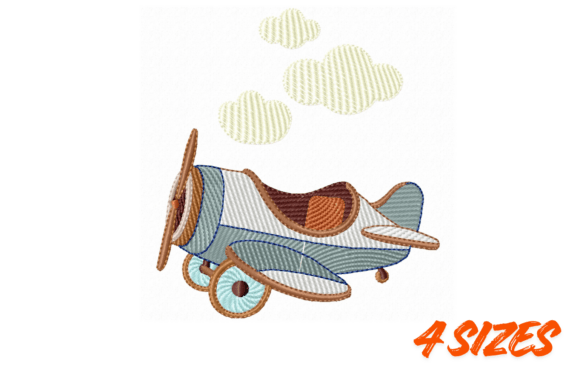
As a professional embroidery designer who has spent years refining machine embroidery design for commercial applications, I often receive inquiries about specific digital assets before they are approved for client production. Today, I am reviewing the Vintage Airplane Embroidery Design, a file described as an adorable creation featuring fluffy clouds, perfect for baby nurseries and children's decor. While the product description highlights its suitability for quilts, pillows, and towels, my focus is strictly on its viability for small business merchandise, branded patches, and custom apparel.
When evaluating any embroidery file for business use, the first impression is critical. The visual personality of the Vintage Airplane Embroidery Design immediately strikes me as playful yet classic. It feels handmade and friendly, which aligns perfectly with brands that want to project warmth and approachability. For a boutique bakery, a creative studio, or a local florist, this design offers a charming accent that can elevate a simple tote bag or apron into a memorable brand asset. However, "adorable" does not always translate seamlessly to professional branding without careful consideration of placement and scale.
Real-World Application for Small Business Merch
The true test of any digital embroidery file lies in its performance on finished products. Imagine a small café looking to create staff uniforms or a handmade shop needing branded product labels. The Vintage Airplane Embroidery Design could serve as an excellent chest logo accent or a sleeve detail on work shirts. Its vintage aesthetic pairs beautifully with denim caps, canvas tote bags, and linen aprons.
For businesses selling physical goods, this design works exceptionally well as a branded patch. A sew-on patch featuring this airplane motif can be attached to the back of a jacket, the side of a hat, or the corner of a reusable shopping bag. This transforms standard inventory into collectible items that customers associate with your brand identity. If you are an Etsy seller or a craft business owner, using this design on personalized gifts or event merch can significantly increase perceived value. The inclusion of fluffy clouds adds a soft texture that contrasts nicely with the structured lines of the aircraft, creating a dynamic look that stands out in commercial embroidery projects.
Furthermore, this design is versatile enough to be used as a subtle accent on product packaging. A small embroidered label inside a garment box or stitched onto a gift tag can provide that premium touch that encourages repeat purchases. When used correctly, the Vintage Airplane Embroidery Design helps build customer trust by signaling attention to detail and a commitment to quality craftsmanship.
Strategic Placement and Brand Identity
Brand identity relies heavily on visual consistency. If your company values a rustic, nostalgic, or family-oriented image, this design reinforces those traits effectively. It suggests a journey, adventure, or carefree spirit, which can be powerful marketing tools for pet brands, travel-related services, or children's clothing lines. However, if your brand aims for a sleek, ultra-modern, or corporate aesthetic, this design might feel too whimsical unless stylized with very specific thread colors and minimal stitching.
To maximize the impact of the Vintage Airplane Embroidery Design on your brand identity, consider how it interacts with your existing color palette. The thread colors chosen will dictate whether the design looks vibrant and bold or muted and elegant. For instance, using navy blue and white threads can make the design look nautical and professional, while pastel yellows and blues lean heavily into the "Babies" category, making it ideal for nursery-themed merchandise but perhaps less suitable for adult-focused apparel.
Critical Considerations for Production
While the potential is high, there are specific areas where the Vintage Airplane Embroidery Design requires caution during production. As an experienced designer, I must advise against using this design without testing its limitations first. One of the primary concerns is stitch density. Designs with intricate details and fluffy elements often have higher stitch counts, which can cause puckering on lightweight fabrics like thin cotton tees or sheer materials.
If you plan to create an embroidered patch from this design, the size is paramount. Small patch sizes can sometimes lose definition, especially if the design includes fine outlines or tiny lettering. On curved surfaces like cap fronts, the distortion of the fabric can blur the details of the clouds or the plane's wings. Therefore, it is essential to review the spacing and confirm the hoop size required for the final application. A design that looks perfect in a 4x4 hoop may fail when scaled down for a keychain or a small pocket logo.
Fabric texture also plays a major role. Dark uniforms require underlay techniques that differ from light fabrics. If the background fabric is textured, such as a heavy tweed or a loose weave, the stability of the Vintage Airplane Embroidery Design could be compromised without proper stabilization. Additionally, items that need frequent washing, such as staff aprons or work shirts, must be tested for thread fastness and fabric durability. High-density designs on items subjected to industrial laundering may require additional reinforcement to prevent cracking or fading over time.
Practical Designer Notes for Success
To ensure the Vintage Airplane Embroidery Design delivers a professional result, follow these practical steps before mass production:
- Test in Black and White: Create a monochrome version of the design to check contrast and readability. This ensures the shape holds up even if color choices change later.
- Check Patch Viability: Simulate the design at the intended patch size. If details disappear, simplify the digitization or adjust the scaling.
- Review Thread Colors: Ensure the selected thread colors provide sufficient contrast against your target fabric texture.
- Inspect Spacing: Verify that the distance between elements (plane and clouds) prevents crowding, which can lead to thread breaks.
- Confirm Hoop Size: Match the design dimensions to your machine's capabilities to avoid unnecessary trimming or re-hooping.
- Test on Real Fabric: Never assume a design works on all materials. Stitch a sample on the actual fabric you intend to use.
- Use Proper Stabilizer: Select a stabilizer that matches the weight and stretch of your fabric to maintain dimensional stability.
- Create a Printable Mockup: Before committing to expensive runs, generate a printable mockup for client approval to visualize the final product.
- Compare Assets: Place the design beside other design assets in your collection to ensure visual consistency across your brand.
- Verify Licensing: Confirm commercial licensing terms before using the file on items for sale. Most digital downloads come with specific restrictions regarding resale.
By adhering to these guidelines, you can transform a simple embroidery file into a cornerstone of your small business merch strategy. The Vintage Airplane Embroidery Design offers a unique blend of nostalgia and charm that, when executed with technical precision, can significantly enhance your finished product. Whether you are decorating a child's pillow or branding a fleet of delivery vehicles, the key lies in understanding the nuances of the medium.
Ultimately, the success of this design depends on the skill of the operator and the preparation of the production process. With the right setup, the Vintage Airplane Embroidery Design can become a beloved element of your brand, fostering engagement and recognition among your customers. Always remember that a successful custom apparel project is built on more than just a pretty image; it requires a deep understanding of materials, machinery, and market needs. By treating every stitch as a deliberate choice, you ensure that your handmade product stands out in a crowded marketplace.